2026 Toyota Corolla Cross vs Honda HR-V: Budget SUV Battle
Toyota's Corolla Cross and Honda's HR-V are the sensible-money subcompact SUVs. We compare price, power, mpg, space, and the hybrid that decides it.
Contender A
2026 Toyota Corolla Cross
Contender B
2026 Honda HR-V
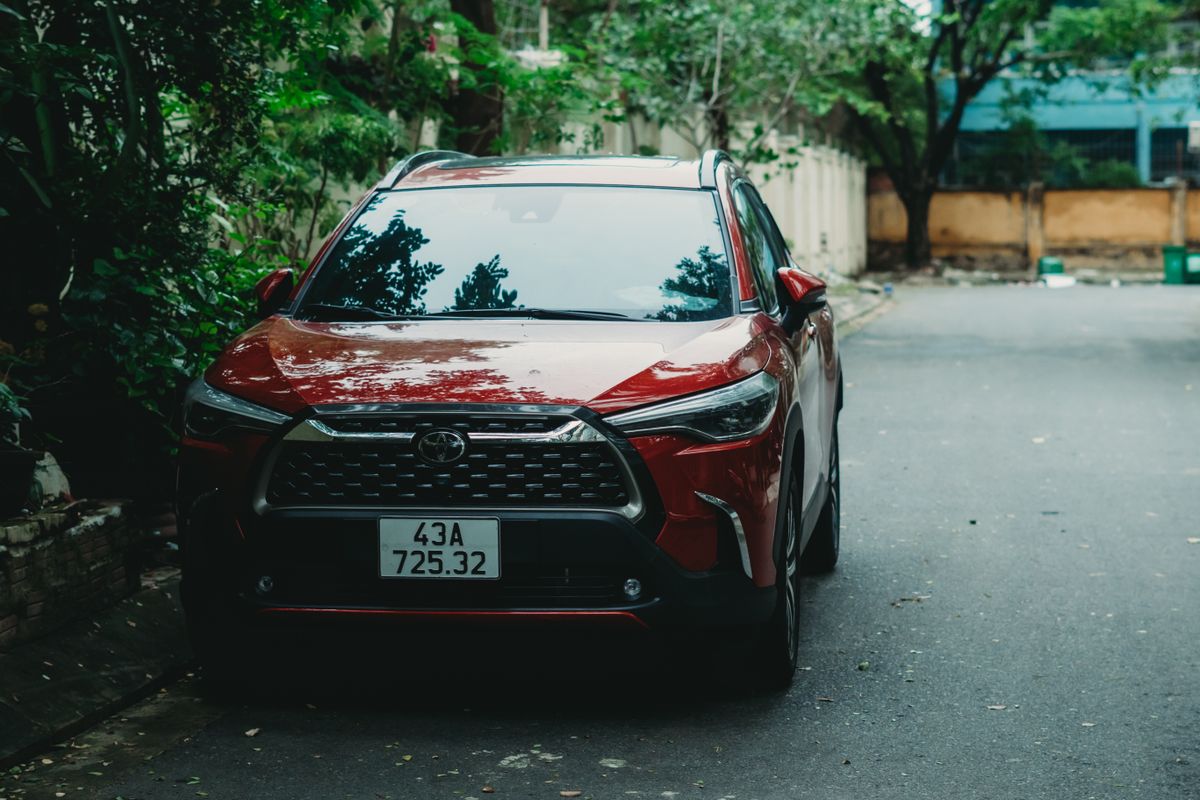
These two are what people actually mean when they say they want "a small, cheap, reliable SUV from a brand I trust." The Corolla Cross is a Corolla on stilts, the HR-V is a Civic in hiking boots, and both lean on the most bankable badges in the business. They're cross-shopped constantly, and after spending time with both my answer comes down to a simple split: one is the better car to sit in, the other is the better car to own.
At a glance
| Spec | Corolla Cross | HR-V |
|---|---|---|
| Base MSRP | $25,235 | $26,600 |
| Engine | 2.0L I4, 169 hp | 2.0L I4, 158 hp |
| Torque | 151 lb-ft | 138 lb-ft |
| Transmission | CVT | CVT |
| EPA (AWD) | 29 city / 31 hwy | 25 city / 30 hwy |
| Hybrid available | Yes, 42 mpg combined | No |
| Cargo behind rear seats | 24.0 cu-ft | 24.4 cu-ft |
| Max cargo | 46.9 cu-ft | 55.1 cu-ft |
| Rear legroom | 32.0 in | 37.7 in |
| Drive | FWD / AWD | FWD / AWD |
Powertrain
Neither of these is quick, so let's calibrate expectations. The Corolla Cross's 169-hp 2.0-liter has a meaningful 11-hp and 13 lb-ft advantage over the HR-V, and you feel it in on-ramp merges. Both use CVTs that prioritize economy over drama.
The bigger powertrain story is that Toyota offers a hybrid and Honda doesn't. The Corolla Cross Hybrid makes 196 hp, returns 42 mpg combined, and adds roughly $2,300 over a comparable gas trim. It's quicker and dramatically more efficient. Honda has no answer in this segment; the HR-V is gas-only.
Verdict on powertrain: Corolla Cross, twice over. The gas engine is stronger, and the hybrid option is the single biggest advantage either car holds in this comparison.
Space and packaging
Here the HR-V punches back hard. Its 37.7 inches of rear legroom embarrasses the Corolla Cross's 32.0, and it's not a spec-sheet illusion. Adults fit comfortably behind adults in the Honda; in the Toyota, rear passengers negotiate. Max cargo tells the same story: 55.1 cubic feet against 46.9, with a lower liftover height (28.6 inches vs 30.9) that makes loading dogs and heavy boxes noticeably easier.
Honda's packaging magic, inherited from the Civic platform, makes the HR-V feel a half-class larger inside than its footprint suggests.
Verdict on space: HR-V, decisively. If you regularly carry rear passengers, this alone might settle it.
Fuel economy and running costs
Gas versus gas, the Corolla Cross wins: 29/31 mpg with AWD against the Honda's 25/30. Over 12,000 miles a year that's a modest but real fuel saving.
Add the hybrid and it stops being close. At 42 mpg combined, the Corolla Cross Hybrid saves roughly $450 a year in fuel versus the HR-V at current gas prices, which pays back the hybrid premium in about five years and then keeps paying. Both brands carry excellent reliability records and identical 3-year/36,000-mile basic, 5-year/60,000-mile powertrain warranties. Resale is a wash between these badges; both are top of the class.
Verdict on running costs: Corolla Cross, especially as a hybrid.
Interior and tech
Both cabins are honest about their price point: durable plastics, sensible layouts, physical climate controls. The HR-V's design is the more grown-up of the two, with a cleaner dash and the Civic's excellent honeycomb vent strip. Front seats are more comfortable in the Honda too.
Both get 8-inch touchscreens with wireless Apple CarPlay and Android Auto on volume trims, plus full standard driver-assist suites: Toyota Safety Sense 3.0 versus Honda Sensing, forward-collision avoidance, adaptive cruise, and lane keeping on every trim. Neither has a meaningful tech edge.
Verdict on interior: HR-V by a nose, on comfort and design maturity.
Pricing and July 2026 incentives
The Corolla Cross starts class="relative z-10",365 lower, $25,235 against $26,600, and tops out around $33,680 for a loaded hybrid XLE AWD versus about $32,000 for a loaded HR-V EX-L AWD. Neither brand is throwing big money at these; subcompact SUVs sell themselves in 2026. Honda's segment lease support currently favors the Civic sedan over the HR-V, and Toyota's favors the Camry and RAV4 family. Check my July lease roundup for the current numbers before you shop either one.
The verdict
Buy the Corolla Cross if fuel cost matters, you want the stronger engine, or you can stretch to the hybrid. The Corolla Cross Hybrid is the best overall vehicle in this segment, period, and the version I'd put my own money on.
Buy the HR-V if people ride in your back seat regularly or you need maximum cargo flexibility. It's the roomier, more comfortable, more pleasant car day to day, and if Honda ever gives it the Civic's hybrid, it wins this comparison outright.
Want to see how their bigger siblings settle the same fight? Read my RAV4 Hybrid vs CR-V Hybrid comparison.
From the Buying Guide
OTD price calculator
Get the real total — tax, title, registration, and doc fees — for any car in any US state.
Read more →Financing playbook
Pre-approval, what APR you really qualify for, and the four F&I traps to refuse.
Read more →Car-buying glossary
APR, money factor, residual, MSDs — plain-English definitions for every term on a dealer paperwork.
Read more →Related articles
2026 Hyundai Kona vs Kia Seltos: Subcompact SUV Cousins Compared
They share an engine and a parts bin but feel different on the road. We compare the 2026 Hyundai Kona and Kia Seltos on price, space, mpg, and tech.
2026 Toyota RAV4 Hybrid vs Honda CR-V Hybrid: Verdict
Two best-selling hybrid crossovers, head to head on price, MPG, cargo, tech, and resale. Which one is the smarter buy in 2026?

Best Lease Deals on New Cars, July 2026
The sharpest leases in America this month: Honda Prologue at $249, Camry at $249, Rogue at $239, and more. All 36-month offers valid through July 31.