2026 Hyundai Kona vs Kia Seltos: Subcompact SUV Cousins Compared
They share an engine and a parts bin but feel different on the road. We compare the 2026 Hyundai Kona and Kia Seltos on price, space, mpg, and tech.
Contender A
2026 Hyundai Kona
Contender B
2026 Kia Seltos
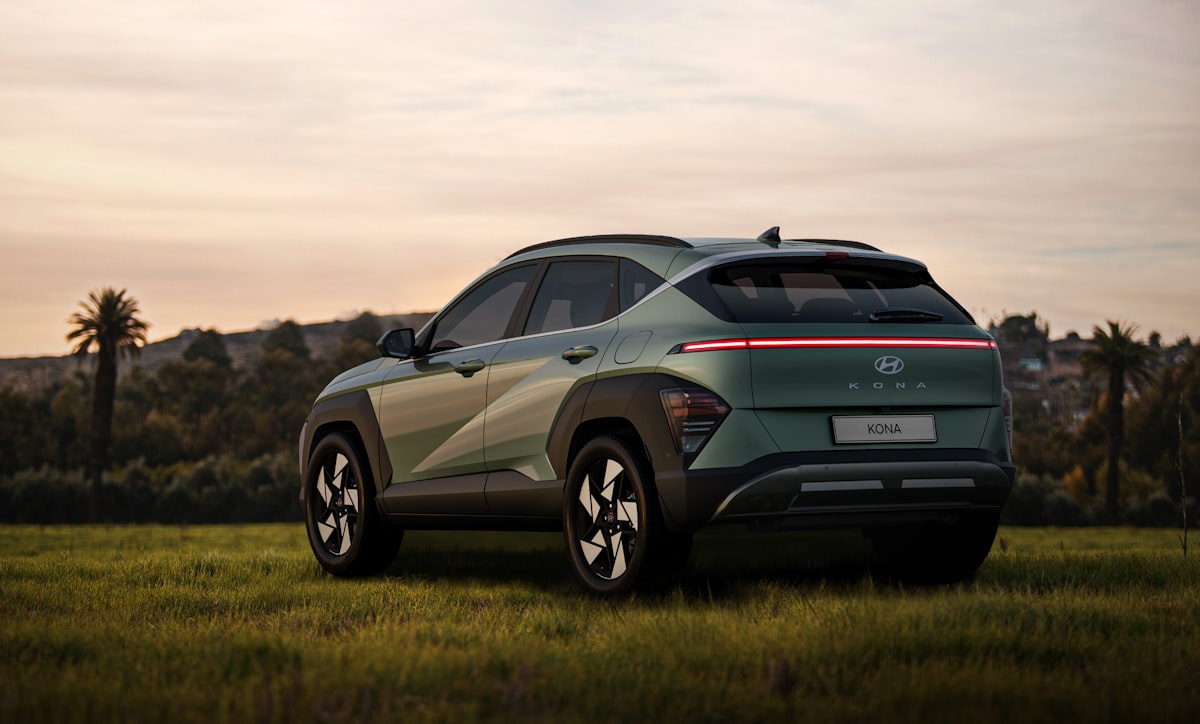
Hyundai and Kia are corporate siblings, and the Kona and Seltos share engines, a finance arm, and a lot of switchgear — so people ask me all the time why they'd pick one over the other. My answer: they aim at different buyers. The current Kona was redesigned to be bigger and more car-like, leaning into a futuristic look and a roomier cabin. The Seltos keeps a boxier, traditional-SUV stance and makes all-wheel drive easier to get. Same family, two different personalities.
At a glance
| Spec | Kona | Seltos |
|---|---|---|
| Base MSRP | $25,700 | $26,200 |
| Base engine | 2.0L I4, 147 hp | 2.0L I4, 146 hp |
| Top engine | 1.6L turbo, 190 hp | 1.6L turbo, 175 hp |
| Transmission | CVT / 8-speed auto | CVT / 8-speed DCT |
| EPA combined (base FWD) | 30 mpg | 29 mpg |
| Cargo behind rear seats | 25.5 cu-ft | 26.6 cu-ft |
| Max cargo | 63.7 cu-ft | 62.8 cu-ft |
| Drive | FWD / AWD | FWD / AWD |
These are two of the cheapest ways into a new SUV in 2026, and both undercut the compact class (RAV4, CR-V) by several thousand dollars while giving up surprisingly little usable space. I keep that in mind every time someone tells me they "can't afford" a new crossover.
Size and packaging
The redesigned Kona is the bigger car here, and you feel it inside. A longer wheelbase means noticeably better rear legroom and front shoulder room, and the cabin reads a half-class up — wide, airy, modern, with a clean dual-screen dash.
The Seltos answers with a more upright, boxy body that turns its slightly smaller footprint into a marginally larger max-cargo number and an easier-to-load square tailgate. If you regularly haul bulky stuff, the Seltos's shape works for you; if you carry adults in back, the Kona's legroom wins.
Verdict on packaging: The Kona is roomier for people, the Seltos marginally more practical for boxes. Most buyers, I think, will be happier with the Kona's extra passenger space.
Powertrain
Both start with a 2.0-liter naturally aspirated four around 147 hp — fine for commuting, unhurried when you load it up or climb a grade. The interesting choice is the turbo.
The Kona's 1.6-liter turbo makes 190 hp with a smooth 8-speed automatic. The Seltos's 1.6 turbo makes 175 hp through an 8-speed dual-clutch. In my experience the Kona's turbo is both the stronger engine and the better-mannered gearbox — the Seltos's dual-clutch can hesitate from a standstill in a way I find mildly annoying in traffic. The Kona Turbo is the quicker, more satisfying car to drive.
Verdict on powertrain: Base engines are a wash. Step up to a turbo and the Kona wins clearly — more power, smoother gearbox.
All-wheel drive and weather
This is where the Seltos plays its best card. AWD is widely available across the lineup and a low-cost option on more trims, which genuinely matters to snowbelt buyers shopping the bottom of the price ladder. The Seltos also wears a slightly more rugged stance with standard roof rails on more trims, so it looks the part.
The Kona offers AWD too, but Hyundai positions it more as a premium add than a default. If AWD is non-negotiable and you're shopping lower trims, the Seltos usually gets you there for less — and I'd send a Buffalo or Denver buyer straight to it.
Interior and tech
Both come loaded for the money: dual 12.3-inch screens up top, wireless Apple CarPlay and Android Auto, and the full Hyundai/Kia driver-assist suite (forward-collision avoidance, lane-keeping, blind-spot monitoring) standard. The warranty is identical and class-leading on both: 5-year/60,000-mile basic, 10-year/100,000-mile powertrain.
The Kona's cabin is the more design-forward, with a bridge-style console and ambient lighting. The Seltos is more conventional but keeps real physical climate knobs, which some of you (and honestly, me) will prefer. Build quality is essentially identical — no surprise, given the shared parts bin.
Reliability and resale
Both run the same proven engines and carry strong, improving reliability records behind the longest mainstream warranty in the business. My five-year resale read is close:
- Kona: 56% of MSRP
- Seltos: 55% of MSRP
That gap is noise. Either holds value reasonably for an affordable SUV, and that long powertrain warranty makes both low-risk used buys down the road.
The verdict
Buy the Kona if you want the roomier, more modern car, you're stepping up to the 190-hp turbo, or you just prefer its bolder look. It's the better all-around vehicle and the one I think most shoppers will be happier with day to day.
Buy the Seltos if you want affordable all-wheel drive, you prefer a boxier traditional-SUV shape, or you value that square cargo opening and upright seating.
You won't go wrong either way — same warranty, same reliability, same value. The Kona is my head-and-heart pick; the Seltos is the snow-and-cargo pick. For current discounts on both, see my compact SUV deals for June 2026.
From the Buying Guide
OTD price calculator
Get the real total — tax, title, registration, and doc fees — for any car in any US state.
Read more →Financing playbook
Pre-approval, what APR you really qualify for, and the four F&I traps to refuse.
Read more →Car-buying glossary
APR, money factor, residual, MSDs — plain-English definitions for every term on a dealer paperwork.
Read more →Related articles
Kia Sorento vs Hyundai Santa Fe 2026: Which Korean Mid-Size SUV Wins?
Kia Sorento vs Hyundai Santa Fe in 2026: optional third row vs PHEV design edge, 10-year warranty vs class-best resale, and which mid-size Korean SUV to buy.

2026 Mazda CX-5 vs Subaru Forester: Which Compact SUV Wins?
The redesigned CX-5 vs the all-new Forester. Pricing, AWD, cargo, tech, fuel economy, and a clear pick for 2026 US buyers.
Best Compact SUV Deals — June 2026
Current APR, lease, and cash incentive programs on the Toyota RAV4 Hybrid, Honda CR-V Hybrid, Kia Sorento, and Mazda CX-5 for June 2026. Programs expire June 30.