2026 BMW 3 Series vs Mercedes C-Class: Which Luxury Sedan Wins?
Pricing, power, tech, and what they actually feel like to drive. The compact luxury sedan benchmark, side by side for 2026.
Contender A
2026 BMW 3 Series
Contender B
2026 Mercedes-Benz C-Class
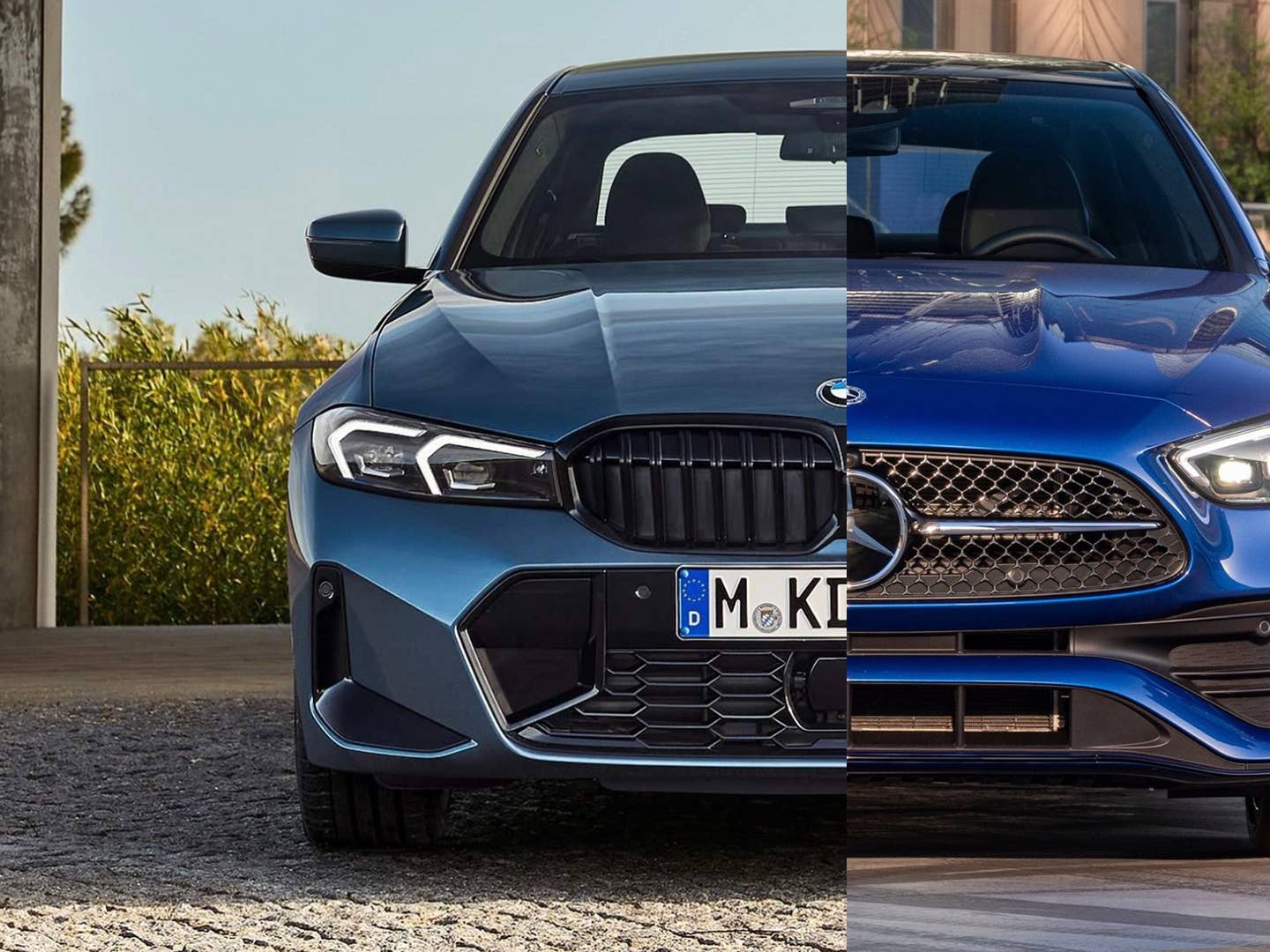
For 40 years these two have been the same argument, and I still get asked to settle it every month: are you a BMW person or a Mercedes person? The 3 Series gets the sharper steering and the more talkative chassis. The C-Class gets the more refined cabin and the more dramatic tech. Both are German, both rear-drive at the base, both available with AWD, both turbocharged, both expensive. The 2026 model year doesn't change my verdict so much as sharpen it.
The C-Class refresh brings the new MBUX 2 interface and an upgraded mild-hybrid system; the 3 Series carries over with a freshened nose and iDrive 8.5. If you're cross-shopping these — and you probably are — here's how I'd decide.
At a glance
| 2026 BMW 330i xDrive | 2026 Mercedes C300 4Matic | |
|---|---|---|
| Starting MSRP | $49,350 | $51,000 |
| Engine | 2.0L turbo I-4 mild-hybrid | 2.0L turbo I-4 mild-hybrid |
| Horsepower | 255 hp | 255 hp |
| Torque | 295 lb-ft | 295 lb-ft |
| 0–60 mph | 5.4 sec | 6.0 sec |
| Transmission | 8-speed automatic | 9-speed automatic |
| EPA combined | 31 mpg | 29 mpg |
| Trunk space | 17.0 cu ft | 11.6 cu ft |
| Touchscreen | 14.9" curved | 11.9" portrait + 12.3" cluster |
| Top hot trim | M340i ($61,300) | C43 AMG ($63,950) |
| Top trim horsepower | 386 hp | 416 hp |
| Standard warranty | 4 yr / 50,000 mi | 4 yr / 50,000 mi |
What's new for 2026
BMW 3 Series. A facelift, not a redesign. Slimmer headlights, a slightly calmer kidney grille that quieted some of the 2023 pushback, refreshed cluster graphics with iDrive 8.5, optional augmented-reality navigation cribbed from the iX, and a new 19-inch wheel. Mechanically untouched — the B48 inline-four with its 48-volt mild-hybrid carries through.
Mercedes C-Class. Bigger updates. The new MBUX 2 platform with cleaner graphics, a voice assistant that finally understands accents, refreshed seat materials, a new ambient-lighting program, and a recalibrated air-suspension option on AMG Line trims. The C300's mild-hybrid gets a 10-hp boost from the starter-generator. The base price climbed about class="relative z-10",200.
Neither got a base-powertrain change. Both still use a 2.0-liter turbo four with a 48-volt mild-hybrid making the same 255 hp and 295 lb-ft — and no, the spec match isn't a coincidence. Same buyer, same compliance, same number.
On the road
The BMW is quicker. Same power, but BMW's 8-speed ZF is the smoothest in the business and the AWD biases rearward at low load, keeping the 330i feeling agile. 5.4 seconds to 60 is a real-world number, the steering loads progressively, and the chassis talks to you without beating you up — that's been BMW's calling card forever, and it still lands.
The Mercedes is more composed. Same engine, a hair slower (6.0 to 60), but the C300 stays flatter through corners, hushes road noise better, and rides more gently over expansion joints. Its 9-speed is a touch lazier to engage. On the same back road, the BMW asks more of you and the Mercedes lets you arrive calmer.
The M340i vs C43 AMG fight is sharper. M340i: 3.0-liter inline-six, 386 hp, that classic BMW six noise, glorious. C43: a 2.0-liter four with an electric turbo, 416 hp on paper, sounding like a slightly angry four-banger because that's what it is. The C43 wins the spec sheet; the M340i wins the experience. For an enthusiast, the M340i is the easy pick — and it's the one I'd buy.
Interior, tech, and the screen war
This is where Mercedes wins. MBUX 2 looks like the future — AR navigation, genuinely natural voice control, ambient lighting tied to the climate cues, and the 12.3-inch cluster paired with the 11.9-inch portrait screen looking unified. The seat materials feel a half-class above the BMW's.
BMW's 14.9-inch curved display is bigger and runs iDrive 8.5 — fast and customizable, if visually busier than MBUX. The rotary controller on the console is one of the best UX inputs ever fitted to a car, and Mercedes deleted theirs years ago, which I count against the C-Class for anyone who actually uses these screens while moving.
Both have wireless CarPlay and Android Auto, head-up displays, 360 cameras, and OTA updates. The rest is taste.
Trunk and practicality
The BMW's trunk is dramatically bigger — 17.0 cubic feet vs 11.6. That's not a rounding error. A full-size suitcase plus a carry-on plus a duffel fits in the BMW; the Mercedes takes the full-size and the carry-on, then you're stacking. If you road-trip with luggage more than once a year, the BMW wins this outright. Rear-seat space is close — both seat two adults behind two adults for an hour, neither is a three-across hauler.
Cost of ownership
Both run premium fuel and want $700–$900 service intervals. BMW's complimentary maintenance covers 3 years / 36,000 miles; Mercedes covers only the first scheduled service, so BMW saves you roughly class="relative z-10",200 over four years. Insurance is within class="relative z-10"00 for most ZIPs, and depreciation is tight — both shed about 38% over three years, a bit worse than a Lexus IS, a bit better than a Genesis G70.
What 2026 buyers should actually pay
Don't pay MSRP — both have cash on the table:
- 330i xDrive: $2,000 BMW cash on most trims, class="relative z-10",500 lease loyalty if you're coming off a BMW, 3.49% APR for 60 months. Expect another class="relative z-10",500–$2,500 below MSRP on top of the cash in May.
- C300 4Matic: class="relative z-10",500 Mercedes cash plus 4.99% APR for 60 months. The C-Class lease has a softer residual this cycle (54% at 36 months vs the BMW's 57%), which makes the BMW the better lease at the same monthly target.
Build the offer email-only first — my negotiating playbook has the exact script.
The verdict
Buy the BMW 3 Series if you actually like driving. The M340i is one of the best driver's sedans in production at any price, the 330i is the best balance of pace, comfort, and chassis in the class, the bigger trunk closes the practicality gap, and the free maintenance closes the running-cost gap. It's where my money goes.
Buy the Mercedes C-Class if the interior matters more than the chassis. MBUX 2 is genuinely impressive, the materials feel more expensive, and the ride is a notch more compliant. The C43 sounds like an angry four because it is one, but for the C300 buyer who wants to look good in the lot and arrive relaxed, the C-Class is the easier yes.
If you've never owned either: drive both back-to-back on the same route in the same 90 minutes. These cars are so close on the spec sheet that the difference shows up in your hands, not your spreadsheet. Whichever one you don't want to give the keys back from is the one to buy.
From the Buying Guide
OTD price calculator
Get the real total — tax, title, registration, and doc fees — for any car in any US state.
Read more →Financing playbook
Pre-approval, what APR you really qualify for, and the four F&I traps to refuse.
Read more →Car-buying glossary
APR, money factor, residual, MSDs — plain-English definitions for every term on a dealer paperwork.
Read more →Related articles
2026 Toyota Corolla Cross vs Honda HR-V: Budget SUV Battle
Toyota's Corolla Cross and Honda's HR-V are the sensible-money subcompact SUVs. We compare price, power, mpg, space, and the hybrid that decides it.
2026 Hyundai Kona vs Kia Seltos: Subcompact SUV Cousins Compared
They share an engine and a parts bin but feel different on the road. We compare the 2026 Hyundai Kona and Kia Seltos on price, space, mpg, and tech.
2026 Lexus TX vs Acura MDX: Three-Row Luxury Compared
Japanese three-row luxury, head to head. We compare the 2026 Lexus TX and Acura MDX on price, power, hybrid options, third-row space, and driving feel.