2026 Toyota Tundra vs Ford F-150: Full-Size Truck Showdown
America's best-selling truck meets Toyota's twin-turbo challenger. We compare the 2026 F-150 and Tundra on towing, payload, powertrains, mpg, and value.
Contender A
2026 Ford F-150
Contender B
2026 Toyota Tundra
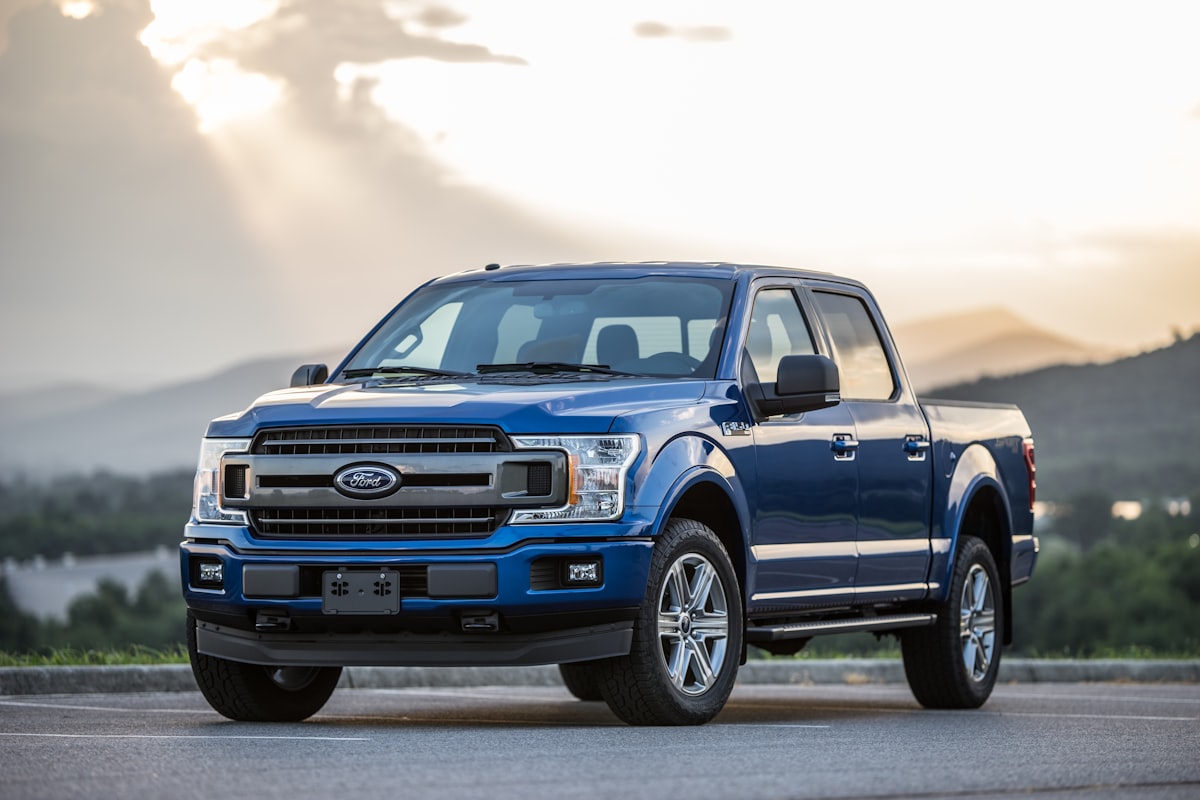
The Ford F-150 has been America's best-selling vehicle for decades, and it earns it with the widest engine range and the highest capability numbers in the class. The Toyota Tundra is the loyal challenger — twin-turbo only, no V8, but backed by Toyota's reliability reputation and a hybrid with serious torque. If you're buying a full-size half-ton in 2026, you're really choosing between two philosophies, and I'll tell you which one I'd pick depending on how you actually use a truck.
At a glance
| Spec | Ford F-150 | Toyota Tundra |
|---|---|---|
| Base MSRP | $40,500 | $42,000 |
| Engine range | 2.7L/3.5L V6, 5.0L V8, hybrid | 3.5L twin-turbo V6, hybrid |
| Base power | 325 hp (2.7L EcoBoost) | 358 hp (i-FORCE) |
| Top power (non-Raptor) | 430 hp (PowerBoost hybrid) | 437 hp (i-FORCE MAX) |
| Max towing | 13,500 lb | 12,000 lb |
| Max payload | 2,440 lb | 1,940 lb |
| EPA combined (V6) | 22 mpg | 20 mpg |
| Onboard power | Pro Power Onboard up to 7.2 kW | 2.4 kW (hybrid) |
The F-150 wins on capability, choice, and efficiency tech. The Tundra answers with stronger standard power and Toyota's ownership story.
Powertrains and choice
This is the F-150's biggest structural advantage: you can have it almost any way you want. The base 2.7-liter EcoBoost (325 hp) is the efficiency-minded volume engine; the 3.5-liter EcoBoost (400 hp) is the tow champ; the 5.0-liter V8 (400 hp) is for buyers who still want eight cylinders; and the 3.5 PowerBoost hybrid (430 hp, 570 lb-ft) adds both efficiency and the Pro Power Onboard generator — up to 7.2 kW, enough to run a job site or back up a house in an outage. I've watched that generator turn a tailgate into a worksite, and it's no gimmick.
The Tundra keeps it simple: there's no V8 anymore. Every Tundra runs a 3.5-liter twin-turbo V6, either standard i-FORCE (358–389 hp) or the i-FORCE MAX hybrid (437 hp, 583 lb-ft). That hybrid's torque is the Tundra's party trick — it pulls hard and early, and it's the most satisfying Tundra to drive. But if you want a V8 or a built-in generator, you have to look at the Ford.
Verdict on powertrain: The Tundra hybrid has the highest torque figure here, but the F-150's range — V8, hybrid, and the 7.2 kW generator — gives you options the Tundra can't.
Towing and payload
If maximum capability is the whole point of a full-size truck, the F-150 leads both numbers that matter:
| Spec | F-150 | Tundra |
|---|---|---|
| Max towing | 13,500 lb | 12,000 lb |
| Max payload | 2,440 lb | 1,940 lb |
| Onboard scales / trailer tech | Yes (Pro Trailer, scales) | Trailer backup assist |
The F-150 tows 1,500 pounds more and carries 500 pounds more in the bed at their respective maxes, and Ford's trailering tech — onboard scales, smart hitch, Pro Trailer Backup Assist — is the most developed in the segment. The Tundra is plenty for most real-world towing, but at the limit, the Ford does more.
Verdict on capability: The F-150, clearly, on both tow rating and payload.
Fuel economy
Neither is thrifty, but the F-150 gives you more ways to save:
| Spec | F-150 | Tundra |
|---|---|---|
| Base V6 combined | 22 mpg | 20 mpg |
| Hybrid combined | 24 mpg | 22 mpg |
| Real-world (V6, mixed) | 18–21 mpg | 17–20 mpg |
The F-150 is 2 mpg ahead at every comparable point, and the PowerBoost hybrid is both more efficient and more powerful than the gas V6s. Over 15,000 miles a year, that edge is worth roughly $300–$400 — not life-changing, but real.
Interior, tech, and ride
Both trucks have come a long way inside. The F-150 has a cleaner, tech-forward cabin with an available 12-inch screen, the genius fold-flat shifter and interior work surface, and Max Recline seats for a real nap on the job. The Tundra's upper trims — 1794 Edition, Capstone — feel like the most premium Tundras ever, with open-pore wood and good leather, and the standard 14-inch touchscreen is the biggest here.
Both run wireless CarPlay and Android Auto with full driver-assist (Ford Co-Pilot360, Toyota Safety Sense). Ride quality is close; the Tundra's available rear air suspension smooths things nicely, while the F-150's broader trim range lets you tune the truck more precisely to your use.
Reliability and resale
This is the Tundra's trump card. Toyota's full-size truck has a reputation for going the distance, and it shows at resale:
- Tundra: 64% of MSRP at five years
- F-150: 58% of MSRP at five years
That's a meaningful trade-in advantage on comparably equipped trucks. The F-150's counter is parts, dealer density, and a bottomless aftermarket — whatever breaks is cheap and easy to fix anywhere in the country, which counts for a lot if you keep a truck a long time.
The verdict
Buy the F-150 if you want maximum towing and payload, the widest engine choice (including a V8 and the Pro Power generator), better fuel economy, or the deepest dealer and accessory network. For most people who actually work their truck, it's the more capable, more flexible pick — and where I'd put my money.
Buy the Tundra if you want Toyota's reliability reputation and class-leading resale, you love the i-FORCE MAX hybrid's torque, or you want that plush Capstone/1794 cabin. It's the long-haul ownership play.
The F-150 wins on capability, choice, and efficiency; the Tundra wins on resale and reputation. For the other half-ton heavyweight matchup, see F-150 vs Silverado 1500, and check current truck deals for June 2026.
From the Buying Guide
OTD price calculator
Get the real total — tax, title, registration, and doc fees — for any car in any US state.
Read more →Financing playbook
Pre-approval, what APR you really qualify for, and the four F&I traps to refuse.
Read more →Car-buying glossary
APR, money factor, residual, MSDs — plain-English definitions for every term on a dealer paperwork.
Read more →Related articles
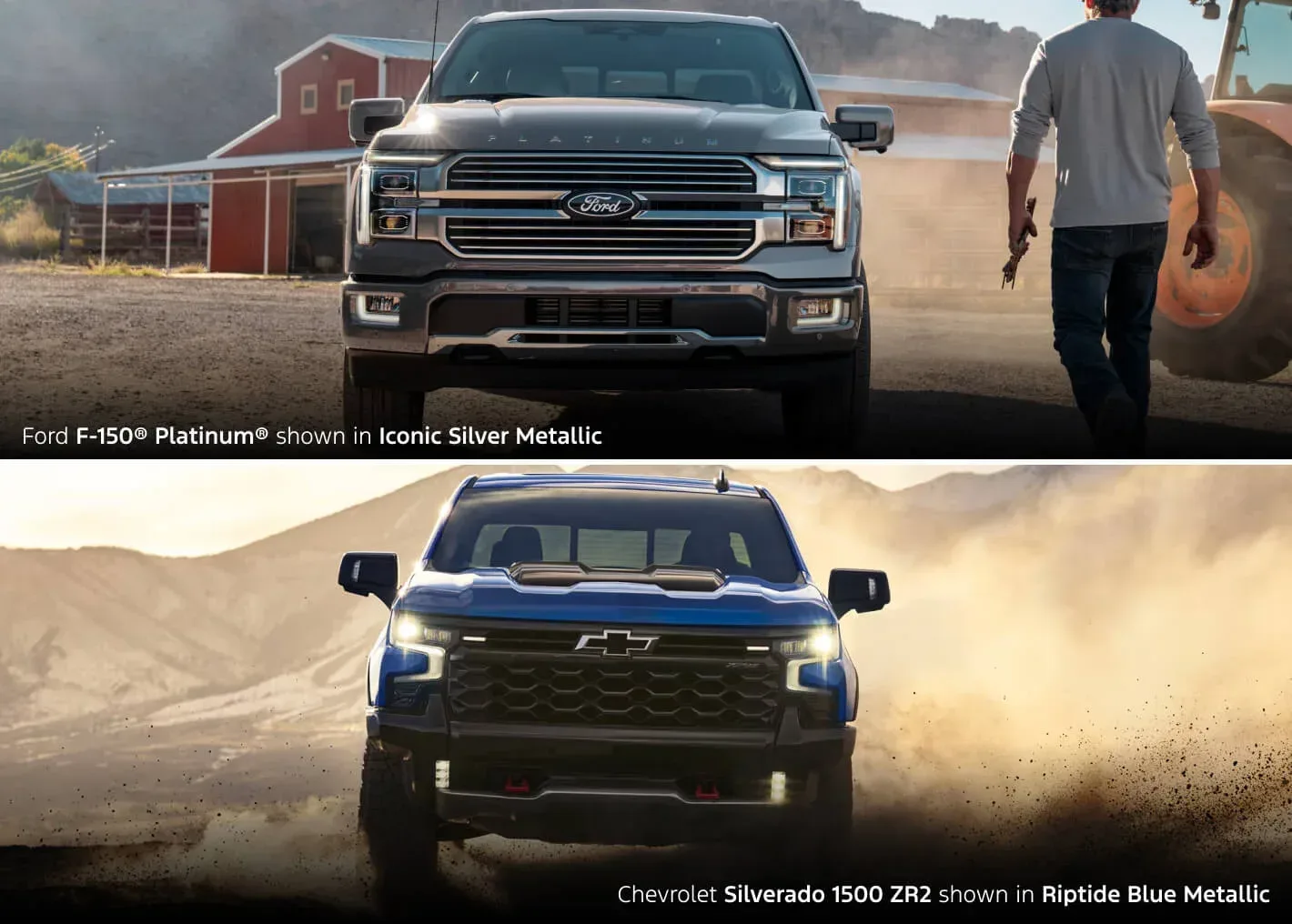
2026 Ford F-150 vs Chevy Silverado 1500: Full-Size Pickup
America's two best-selling pickups go head to head. Towing, payload, fuel economy, tech, and resale across every trim level for 2026.
Ram 1500 vs GMC Sierra 1500 2026: Which Full-Size Truck Wins?
Ram 1500 vs GMC Sierra 1500 in 2026: coil-spring ride vs magnetic ride control, eTorque mild hybrid vs diesel, and which premium full-size truck to buy.

Best Pickup Truck Deals — June 2026
APR, cash, and lease programs on full-size and mid-size pickups for June 2026. Ram, Ford, Chevy, GMC, and Toyota incentives valid through June 30.