EV Home Charging Setup Guide 2026: Level 1 vs Level 2 vs DCFC
Everything you need to set up home EV charging in 2026 — Level 1 vs Level 2 explained, EVSE hardware picks, electrical requirements, and real install costs.

Buying an EV or PHEV without planning your home charging setup first is the single most common mistake new electric vehicle owners make. Most EV owners do 80–90% of their charging at home, and the right setup determines your daily routine more than any spec on the window sticker. This guide covers what you actually need, what it costs, and what you should do before the car arrives.
Charging levels explained
There are three charging levels. Only two apply to home charging.
Level 1 (standard 120V outlet)
Every home in North America has 120V outlets. Every EV comes with a Level 1 EVSE (electric vehicle supply equipment) cord in the trunk. Plug in and charge.
The catch: Level 1 adds approximately 3–5 miles of range per hour of charging. On a 300-mile-range EV like a Tesla Model Y or Chevy Equinox EV, a full overnight charge (8 hours) recovers roughly 30–40 miles.
Who Level 1 works for: PHEV drivers with a 20–50 mile electric range. A Jeep Wrangler 4xe (21 miles EV range) fully charges on Level 1 overnight. A Toyota RAV4 Prime (42 miles) charges in approximately 12 hours on 120V.
Who Level 1 doesn't work for: Long-range BEV drivers. A Ford Mustang Mach-E with 300 miles of range would take 60+ hours to fully charge on 120V. Daily driving is manageable only if your commute is under 30 miles each way.
Level 2 (240V, 32–48 amp)
Level 2 is what most EV owners install at home. It uses a 240V circuit — the same voltage as a clothes dryer or electric stove — and adds 20–35 miles of range per hour depending on the charger's amperage and the car's onboard charger capacity.
A typical 48-amp Level 2 EVSE (the hardware maximum most home circuits support) can add approximately 35 miles/hour. A 300-mile BEV fully charges in roughly 8–9 hours — overnight from near-empty.
This is the right choice for most EV buyers.
DC Fast Charging (Level 3)
DCFC uses direct current and can add 100–200+ miles in 20–30 minutes. It requires commercial-grade equipment and is not practical or cost-effective for home installation. Use public networks (Tesla Supercharger, Electrify America, EVgo) for fast top-ups on long trips.
What you need for Level 2 at home
The EVSE unit (the charger)
The EVSE is the box on your wall that controls the connection between your home's electrical panel and the car. Common options:
| Brand/Model | Amps | Add miles/hr | Price (hardware) | Notes |
|---|---|---|---|---|
| ChargePoint Home Flex | 16–50A | 25–37 mi/hr | $549 | Wi-Fi, app, smart scheduling |
| Grizzl-E Classic | 32A | ~25 mi/hr | $279 | No app, very reliable, good for cold climates |
| Emporia Level 2 | 24–48A | 18–37 mi/hr | class="relative z-10"99 | Budget pick; works well |
| Wallbox Pulsar Plus | 32–48A | 25–37 mi/hr | $649 | Smart, compact, bi-directional on some EVs |
| Tesla Wall Connector | 48A | ~37 mi/hr | $395 | Works with all EVs (J1772 adapter included); best for Tesla owners |
| Autel MaxiCharger | 50A | ~38 mi/hr | $399 | Highest residential output; verify car's onboard charger limit first |
Key note: Your car's onboard charger limits how fast it can accept power regardless of what the EVSE delivers. A Chevy Equinox EV accepts up to 11.5 kW (about 48A at 240V). A Nissan LEAF base accepts 6.6 kW — a 48A EVSE charges it no faster than a 32A unit would.
Electrical requirements
A Level 2 EVSE needs a dedicated 240V circuit with a breaker rated at 125% of the EVSE's operating amperage.
| EVSE amperage | Required breaker | Required wire gauge |
|---|---|---|
| 16A (3.8 kW) | 20A | 12 AWG |
| 24A (5.8 kW) | 30A | 10 AWG |
| 32A (7.7 kW) | 40A | 8 AWG |
| 40A (9.6 kW) | 50A | 8 AWG |
| 48A (11.5 kW) | 60A | 6 AWG |
If your panel is already near capacity, adding a 60A circuit may require a panel upgrade or load management equipment. An electrician can tell you at the site visit.
What does installation cost?
Installation cost varies by region and how far your panel is from your garage, but typical ranges in 2026:
| Scenario | Estimated cost |
|---|---|
| Simple run, panel near garage, no upgrade | $350–$600 |
| Long conduit run (40+ ft) or panel on opposite side of house | $600– class="relative z-10",200 |
| Panel upgrade required (100A → 200A service) | $2,000–$5,000 |
| Subpanel installation for detached garage | class="relative z-10",200–$2,500 |
Get at least two electrician quotes. Prices vary significantly by region. EVSE manufacturers (ChargePoint, Wallbox) have certified installer networks; using them often qualifies for rebates.
Federal tax credit and utility rebates
Federal tax credit (2026)
The 30C Alternative Fuel Vehicle Refueling Property Credit covers 30% of EVSE hardware and installation costs, up to class="relative z-10",000 for residential installations. This applies to:
- EVSE unit hardware
- Electrical installation labor
- Required panel upgrades if directly tied to EV charging
Verify current eligibility at irs.gov/credits-deductions/clean-vehicle-tax-credits — limits and qualifying locations change annually.
Utility rebates
Many utilities offer additional rebates on top of the federal credit. Common programs:
- PG&E (California): $200–$500 rebate on qualifying Level 2 EVSE
- DTE Energy (Michigan): $500 rebate on installed Level 2 charger
- Xcel Energy (Colorado, Minnesota): $250 rebate plus discounted overnight EV charging rate
Check your utility's website or energysage.com for current programs in your area.
Before the car arrives: the checklist
- Confirm your garage or parking area has space for a wall-mounted EVSE
- Locate your electrical panel — note its amperage (100A or 200A) and available breaker slots
- Schedule an electrician site visit before buying the car; get a quote for a 40A or 50A circuit
- Verify your car's maximum onboard charger capacity (kW) — this determines whether 32A or 48A is worth the extra cost
- Order the EVSE unit so it arrives before the car
- Check utility rebate programs in your area; some require pre-approval before installation
- Check for the federal 30C tax credit eligibility on irs.gov
What most buyers should do
For a long-range BEV (Equinox EV, Mustang Mach-E, Ioniq 5, Model Y): Install a 48-amp Level 2 EVSE on a 60A dedicated circuit. Use the ChargePoint Home Flex or Emporia Level 2 at the hardware level. Budget $250–$550 for the EVSE and $400–$800 for installation in a straightforward setup.
For a PHEV (RAV4 Prime, Wrangler 4xe, BMW 330e): Level 1 overnight is sufficient for daily use. Install Level 2 only if you want faster top-ups mid-day or if your commute regularly exceeds 30 miles.
Total cost for a straightforward Level 2 install in 2026: approximately $650– class="relative z-10",200 all-in before the federal credit. After the 30% credit (up to class="relative z-10",000), net cost is typically $300–$700.
From the Buying Guide
Related articles
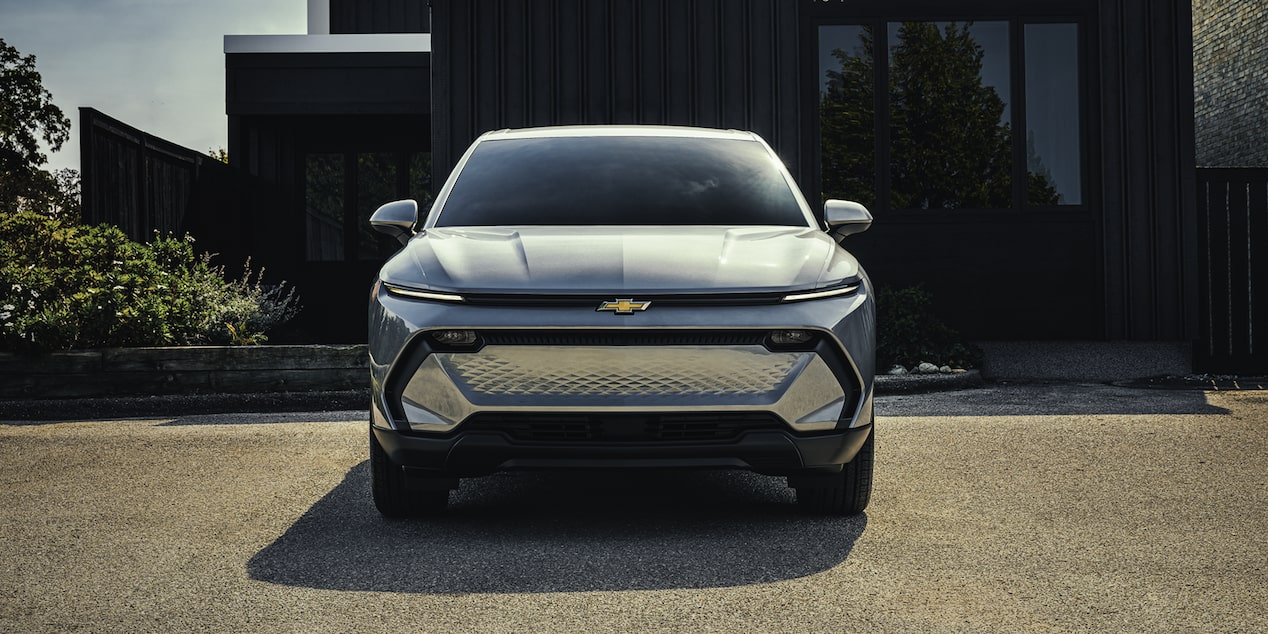
Chevy Equinox EV vs Hyundai IONIQ 5 (2026)
Price, range, charging speed, and interior: the most affordable mainstream EV crossover against the benchmark Korean all-rounder.

Your Lease Is Ending: Buy It, Return It, or Trade It?
The 90-day lease-end playbook: how to check for equity, when the buyout beats returning, disposition and wear charges, and the exact steps in order.
New vs Used in 2026: Which Should You Actually Buy?
The real math on new versus used in 2026: financing-rate gaps, compressed used prices, warranty value, and clear decision rules for every budget.